Timeless Elegance: Using Rose Seamless Patterns in Design
Capturing the fleeting beauty of a garden in full bloom is a challenge every designer eventually faces. We want our projects to feel alive, organic, and sophisticated, yet we also need the practicality of digital assets that don't break the workflow. This is where the Rose Seamless Pattern collection steps in, offering a solution that bridges the gap between artistic expression and technical efficiency. These decorative flower and rose seamless patterns are more than just repeating backgrounds; they are carefully constructed vector illustrations available in EPS, JPG, SVG, and transparent PNG formats, designed to infuse projects with a sense of timeless elegance.
Understanding the Visual Character of Decorative Flower Ornaments
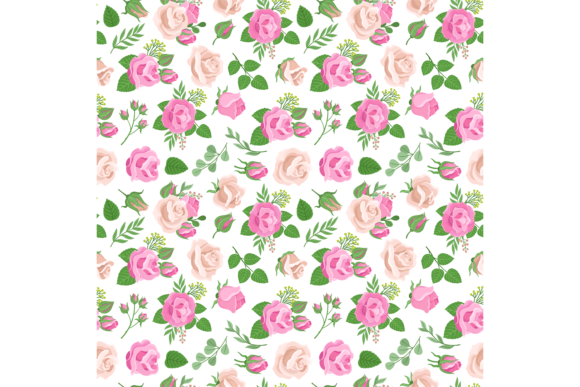
At its core, a Rose Seamless Pattern is a study in balance. Visually, these patterns typically feature stylized rose motifs—sometimes hyper-realistic, sometimes abstracted into geometric shapes—intertwined with leaves, stems, and secondary floral elements. The "seamless" aspect is crucial; it means the edges of the tile match perfectly, allowing the pattern to repeat infinitely without visible breaks or jarring lines. This creates a cohesive fabric-like texture that feels intentional and polished.
The personality of these patterns leans heavily into themes of romance, nature, and classic design. Depending on the specific illustration style, a rose pattern can evoke Victorian vintage charm with intricate, detailed line work, or it can feel distinctly modern with bold, simplified shapes and negative space. The color palette plays a massive role here. A monochromatic scheme in soft pinks and greens suggests a gentle, feminine brand identity, while a high-contrast black-and-white vector version feels edgy, editorial, and suitable for contemporary packaging design. The "transparent PNG" format is particularly valuable here, allowing designers to overlay these intricate flowers onto complex backgrounds without worrying about white boxes or color clashing, making it a truly versatile design asset.
Where Floral Patterns Shine: Applications from Branding to Publishing
The utility of a high-quality decorative flower textile ornament extends far beyond simple stationery. For entrepreneurs and small business owners, these patterns are powerful tools for building a distinct brand identity. Imagine a boutique skincare line using a soft, watercolor-style rose pattern on their secondary packaging—the tissue paper, the box liners, or the sticker seals. It immediately communicates a commitment to natural ingredients and luxury. Similarly, a wedding planner or a high-end bakery can use these vector illustrations to create cohesive social media graphics that feel curated rather than generic.
In the realm of editorial design, the application is equally potent. Publishers and bloggers can utilize these patterns as subtle background textures for magazine covers, chapter headings, or website hero sections. Because the assets are provided in vector formats like EPS and SVG, they can be scaled to massive dimensions for print without losing clarity, or animated subtly for web design elements. For crafters and hobbyists, the SVG format is a game-changer for digital cutting machines, allowing for precise creation of decals, iron-on transfers, and scrapbooking elements. The versatility of the Rose Seamless Pattern ensures it isn't just a static image but a functional tool for production.
Strategic Pairing: Typography and Visual Hierarchy
Introducing a complex floral pattern into a design requires a strategic approach to modern typography. The goal is to ensure readability while allowing the pattern to enhance, not overwhelm, the message. This is where the interplay between the pattern and your chosen typeface becomes critical.
If your Rose Seamless Pattern is dense and highly detailed, you need to create contrast. Pairing the pattern with a clean, geometric sans serif font often yields the best results. The simplicity of the sans serif letters provides a visual "resting place" for the eye, ensuring that headlines and body text remain legible against the ornate background. Conversely, if the pattern is used sparingly—perhaps as a header or a footer accent—you can afford to be more adventurous. A flowing script font or an elegant serif font can amplify the romanticism of the roses, creating a sophisticated visual hierarchy. However, avoid using a handwritten font or an overly decorative display font directly on top of a busy floral pattern, as the competing details will likely result in a chaotic layout that frustrates the viewer.
Practical Guidance for Integration and Licensing
Before committing to a specific asset, it is wise to evaluate the technical specifications and licensing terms. First, consider the color palette of the pattern against your existing brand identity. While vector formats allow for easy recoloring, choosing a pattern that already aligns with your aesthetic saves time. Test the pattern at different scales; a design that looks like a delicate rose petal texture at a small size might look like a giant, overwhelming flower when tiled across a full-screen website background.
Licensing is the other major checkpoint. If you are a designer working on a client project or a business owner creating merchandise, you must ensure the asset comes with a commercial font or graphics license. This usually covers you for print-on-demand (POD) services, digital products for sale, and client work. Always check if the license covers the specific usage you intend—some licenses restrict the number of end products or require an extended license for mass production.
Ultimately, the Rose Seamless Pattern