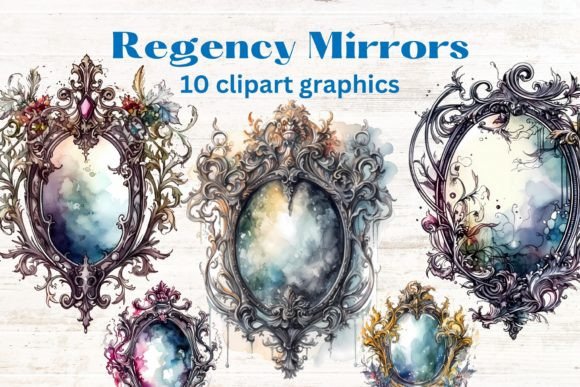
Timeless Charm: Using Regency Decorative Mirrors Clipart
There is a specific kind of elegance associated with the Regency era—think of the intricate gold gilding, soft pastels, and the romantic curves found in classic interiors. If you are working on a project that requires a touch of sophistication without looking outdated, the Regency Decorative Mirrors Clipart collection offers a practical solution. This set provides ten distinct watercolor illustrations that bridge the gap between vintage charm and modern digital flexibility.
The Aesthetic Appeal: Soft Watercolors Meet Architectural Detail
Unlike rigid vector graphics, these illustrations utilize a watercolor style that brings a sense of warmth and organic texture to your designs. The collection captures the architectural nuances of the period, featuring ornate scrollwork and baroque flourishes typical of the time. However, the color palette remains soft and versatile, allowing these design assets to function as subtle background elements or bold focal points depending on your composition.
The true strength of this collection lies in its technical preparation. You receive 20 files in total: 10 JPGs with white backgrounds for quick placement, and 10 PNGs with transparent backgrounds. The transparent PNGs are particularly valuable for designers. They allow you to layer these mirrors over complex backgrounds, photography, or textured papers without the hassle of masking or "cutting out" the image. At 4000 pixels, the resolution is high enough for commercial printing, ensuring your designs remain crisp whether on a small greeting card or a large wall art print.
Practical Applications for Designers and Entrepreneurs
When it comes to application, this collection is surprisingly versatile. It functions much like a display font in your toolkit—something you use to establish a mood rather than just convey raw information. Here are a few practical ways to integrate these assets into your workflow:
- Product Packaging and Merchandise: If you sell physical goods like candles, soaps, or vintage clothing, these illustrations add an immediate "premium" feel to your labels. They work exceptionally well on custom t-shirts, tote bags, and mugs where a single, high-impact graphic is needed.
- Digital Branding and Web Design: For lifestyle bloggers, interior designers, or wedding planners, these images can serve as unique visual anchors. Use them in website headers or as decorative breaks in long-form content. They pair beautifully with serif fonts like Garamond or modern sans serif fonts like Montserrat to create a balanced visual hierarchy.
- Social Media Graphics: In the fast-paced world of social media, a distinct aesthetic stops the scroll. Using these mirrors in Instagram stories or Pinterest pins can create a cohesive brand identity that signals quality and attention to detail.
Integrating Clipart into Modern Typography
A common mistake in design is treating imagery and text as separate entities. To create a professional layout, think of this Regency Decorative Mirrors Clipart as part of your typography strategy. For instance, if you are designing a logo or a masthead, you might frame a script font or a handwritten font inside one of the mirror shapes. This creates a cohesive lockup that feels intentional.
Consider the negative space within the mirror illustrations. They are perfect for housing text. A wedding invitation, for example, could feature the couple's names inside the reflection area of the mirror. This technique guides the viewer's eye directly to the most important information while surrounding it with decorative elements that enhance readability through context.
Choosing the Right Context and Pairings
Not every project calls for vintage flourishes. When evaluating the fit for these images, consider your target audience. These assets resonate strongly with audiences interested in romance, history, luxury, and classic aesthetics. If your brand leans heavily toward ultra-minimalist or industrial styles, these illustrations might clash. However, for "Modern Vintage" or "Cottagecore" aesthetics, they are a perfect match.
When pairing these images with typefaces, contrast is key. The intricate details of the mirror frames can get lost if paired with an overly busy handwritten font. Instead, opt for clean lines. A modern typography approach using a geometric sans serif font allows the ornate details of the clipart to stand out without overwhelming the layout. Conversely, pairing them with a classic serif font reinforces the historical aspect for a more traditional editorial design.
Before finalizing your design, always test the images at the size they will be viewed. Because these are raster images (JPG and PNG), scaling them up significantly beyond their native 4000px size can result in pixelation. However, for standard print sizes and digital use, they offer exceptional clarity. By treating these images as premium font alternatives—valuable assets that define the tone of your project—you can elevate standard templates into sophisticated, professional designs that capture the imagination.