The Allure of Middle Eastern Decorative Windows
More Than Just a Design: A Story in Every Pane
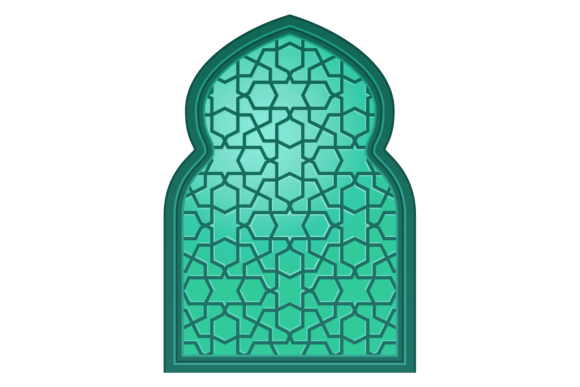
Have you ever found a design asset that feels less like a tool and more like a portal? That’s the feeling I get when working with the Middle Eastern Decorative Window with Traditional Ornament. This isn't just another graphic element to drop into a project; it's a piece of cultural storytelling, a fragment of architectural beauty captured for modern use. Isolated on a crisp white background and available in versatile formats like EPS, JPG, SVG, and transparent PNG, this asset offers a unique blend of historical richness and contemporary utility. It represents the intricate, geometric precision and flowing floral motifs characteristic of Islamic art, where pattern is not merely decoration but a reflection of order, infinity, and the divine.
The visual personality of this decorative window is one of sophisticated complexity. At first glance, you're drawn to the masterful interplay of geometry—stars, polygons, and tessellations that lock together with mathematical certainty. Woven into this rigid framework are elegant arabesques and vegetal scrolls, creating a beautiful tension between structure and organic flow. The style evokes a sense of timeless heritage, luxury, and meticulous craftsmanship. Its overall appeal lies in its ability to command attention without shouting; it’s a statement piece that conveys depth, culture, and an appreciation for artistry. For a designer or brand strategist, it’s a powerful visual shorthand for authenticity and global elegance.
Strategic Applications: Where This Element Truly Shines
Understanding where the Middle Eastern Decorative Window works best is key to unlocking its potential. Its nature as a detailed, ornate graphic makes it a premier display font companion, but it’s not a typeface itself. Think of it as a complementary design asset that elevates typography. In logo design or brand identity projects for high-end hospitality brands, boutique hotels, artisanal perfumeries, or luxury fashion labels, this window can serve as a foundational motif. It can be adapted into a brand mark, a pattern for packaging, or a textural background for stationery, instantly communicating a story of opulence and cultural depth.
Beyond branding, its applications are vast. In editorial design, it can frame a feature article on architecture, travel, or art history, adding visual weight and context. For packaging design, imagine this ornament embossed on a gift box or used as a sleeve for a premium product—it transforms ordinary packaging into a keepsake. In the digital realm, it’s a standout for web design hero sections, particularly for sites related to design, culture, or luxury goods. As social media graphics, a single window element can become a captivating centerpiece for an Instagram post or a YouTube thumbnail, stopping the scroll with its intricate beauty. For crafters and hobbyists, the transparent PNG is perfect for printables, custom fabric patterns, or unique stationery designs.
Making It Work: Practical Guidance for Designers and Creators
Integrating such a distinctive element requires a thoughtful approach. First, consider your project's voice. Is it aiming for authentic cultural resonance, or simply borrowing a visual aesthetic? For the latter, be mindful of context to avoid superficial use. The Middle Eastern Decorative Window is a creative font ally, but it demands space. Pair it with clean, modern sans serif or elegant serif typefaces to avoid visual competition. A bold, geometric sans serif can complement its structure, while a classic serif can harmonize with its traditional roots. Avoid pairing it with overly ornate script fonts or handwritten fonts, as the combination can quickly become chaotic.
Evaluate the asset’s fit by considering scale and detail. In small applications like a favicon or a tiny icon, its intricate patterns may become a muddy blur. It thrives at larger sizes where its details can be appreciated. Always test your font pairings and layout in context. Place the window graphic alongside your chosen typography and other brand elements. Does it create a clear visual hierarchy, or does it fight for dominance? The goal is cohesion, not competition. Review the included file formats: the vector EPS and SVG are your best friends for scaling without loss of quality, ideal for large-format prints or responsive web design. The transparent PNG is perfect for quick overlays in digital projects.
Finally, a note on professionalism and licensing. If this asset is for commercial use, ensure you have the appropriate license for your project’s scope—whether for a client’s brand, merchandise, or digital product. Using properly licensed premium fonts and assets is non-negotiable for maintaining professionalism and avoiding legal pitfalls. The Middle Eastern Decorative Window is more than a decorative clip-art; it’s a piece of modern typography heritage. Used with intention and skill, it can profoundly enhance readability by providing visual interest, strengthen brand perception by adding layers of meaning, and boost audience engagement by offering something genuinely unique and beautiful to look at. It’s a tool for creators who want to tell richer, more textured stories.