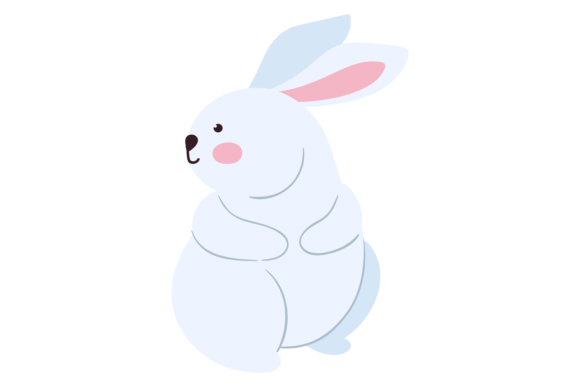
Adorable Vectors: Unlocking the Potential of Decorative Bunny Drawing
In the crowded landscape of modern design, finding assets that balance cuteness with professional utility can be a challenge. We often encounter clip art that feels too childish or stock imagery that lacks personality. This is where the Decorative Bunny Drawing. Cute Baby Animal collection steps in. It isn't just a generic illustration; it is a carefully crafted set of design assets—available in EPS, JPG, SVG, and transparent PNG formats—that offers a distinct personality. For the entrepreneur, the indie publisher, or the freelance designer, this vector represents a bridge between whimsical charm and high-quality brand identity.
The Anatomy of Appeal: More Than Just a Cute Face
When we analyze the Decorative Bunny Drawing. Cute Baby Animal, the first thing we notice is the stylistic restraint. This isn't a cartoonish, hyper-exaggerated mascot with oversized eyes. Instead, it leans into a decorative aesthetic. The line work suggests a level of sophistication—perhaps a hand-drawn feel with clean vector execution. This makes it a versatile piece of modern typography adjacent art. It functions similarly to a handwritten font or a script font; it adds a human touch to digital mediums that often feel sterile.
The isolation on a white background is a technical necessity, but the "personality" of the drawing is what sells the product. It projects innocence and approachability. For a brand identity, this visual language speaks to gentleness, organic quality, and care. Whether you are using it as a standalone logo element or integrating it into a larger composition, the bunny acts as an anchor for emotional connection. It is a creative font equivalent in image form—designed to evoke a specific feeling immediately upon viewing.
Strategic Applications: From Packaging to Pixels
Understanding where to deploy the Decorative Bunny Drawing is crucial for maximizing your return on investment. The file formats provided—EPS and SVG for scalability, PNG for transparency, and JPG for general use—indicate that this asset is built for cross-platform versatility.
Brand Identity and Logo Design
For small business owners, particularly in sectors like children’s apparel, organic baby food, or artisanal crafts, this bunny can serve as the cornerstone of a logo design. Because it is a vector (EPS/SVG), you can scale it to fit a tiny favicon or a massive storefront banner without losing resolution. It pairs exceptionally well with a serif font for a vintage, trustworthy vibe, or a rounded sans serif font to maintain that modern, clean look.
Publishing and Editorial Design
Publishers and bloggers can use this illustration to break up text-heavy pages. In editorial design, a decorative element helps guide the reader's eye and provides visual relief. Imagine this bunny sitting in the margins of a parenting blog or as a chapter header in a children’s e-book. It adds a layer of polish that distinguishes amateur content from professional publishing.
Digital Marketing and Social Media
On social media, stopping the scroll is the primary goal. The Cute Baby Animal character is inherently engaging. It can be used in social media graphics to highlight a sale, celebrate a holiday (Easter being the obvious, but not only, occasion), or simply to soften the hard-sell approach of digital marketing. The transparent PNG format is particularly useful here, allowing you to overlay the bunny onto complex photography or textured backgrounds seamlessly.
Packaging and Print
If you are designing physical goods, the SVG and EPS files are invaluable. Packaging design requires crisp edges and precise color matching. This asset allows you to create stickers, hang-tags, or box art that looks professional. The "decorative" nature of the drawing suggests it would pair well with floral motifs or geometric patterns, creating a rich, layered visual experience on the shelf.
Design Mechanics: Hierarchy, Readability, and Pairing
Using a strong visual asset like the Decorative Bunny Drawing requires a grasp of visual hierarchy. You cannot simply drop a high-quality illustration onto a canvas and expect it to work without context.
Visual Hierarchy: The bunny should generally serve as a focal point or a secondary accent, not a background texture. If you are using it for a header, ensure the surrounding negative space is sufficient to let the details of the drawing breathe. Cluttering the space around the bunny diminishes its impact.
Font Pairing: This is where modern typography meets illustration. Because the bunny is "decorative," it implies intricate detail. Therefore, you should avoid pairing it with highly ornate fonts like complex script fonts or distressed handwritten fonts, as this creates visual noise. Instead, look for contrast. A clean, geometric sans serif font provides a modern counterpoint. A classic serif font offers a timeless, storybook aesthetic. The goal is to ensure readability—the text must be easy to scan, while the bunny adds the flavor.
Consistency: If you adopt this bunny as part of a brand identity, consistency is key. Use it sparingly but regularly. It becomes a recognizable mascot. Overuse can dilute the brand message, making it feel juvenile rather than playful.
A Practical Guide to Implementation
Before you finalize your project, take a moment to evaluate the fit and the technical requirements. Treat this asset like a premium font—it requires respect for its design intent.
- Evaluate the Tone: Does the "cute" factor align with your target audience? While effective for family-oriented brands, a corporate law firm might struggle to integrate a baby bunny into their materials. Know your market.
- Test Scalability: Open the SVG or EPS file and test it at various sizes. Look at the line weights. Do they hold up at 50 pixels? Do they remain distinct at 5000 pixels? Good design assets are robust.
- Color Adaptability: Since the image is isolated on white, you will likely need to change colors to match your palette. Ensure the vector paths are clean so you can easily swap fills and strokes in Adobe Illustrator or Affinity Designer.
- Commercial Licensing: Always verify the license. If you are creating commercial font style merchandise (like t-shirts or mugs) featuring the bunny, you need to ensure the license covers "print-on-demand" or extended commercial use. Do not assume a standard license covers unlimited reproduction.
- File Management: Keep your master EPS files safe. The JPGs are for previews or web use where transparency isn't needed, but the vector files are your production masters.
Ultimately, the Decorative Bunny Drawing. Cute Baby Animal is a versatile tool in the creative arsenal. It bridges the gap between stock photography and custom illustration. For the designer looking to add warmth to a layout, or the entrepreneur building a friendly brand, this asset provides the visual shorthand needed to communicate care, quality, and charm. By applying the same strategic thinking you would use for typography